

12 Surprising Facts About Singapore You Never Knew
From the secrets of Changi Airport to UNESCO-listed street food - discover 12 fascinating Singapore facts that’ll have you booking your next trip before you finish reading


From the secrets of Changi Airport to UNESCO-listed street food - discover 12 fascinating Singapore facts that’ll have you booking your next trip before you finish reading
Contents
- Geography and ‘city-state’ facts most people get wrong
- Food culture — from hawker centres to Michelin stars
- Changi Airport — more than just a transit stop
- Laws, customs and etiquette UK travellers should know
- History and independence facts worth knowing
- The most Instagrammable spots you’ve probably never heard of
- Plan your Singapore trip with Flight Centre UK
- FAQ: Singapore fun facts
Think you know Singapore? The Lion City is one of those destinations that keeps surprising you — whether it’s your first visit or your fifth. From a UNESCO-listed street food scene where a Michelin-starred meal costs less than a London coffee, to an airport so impressive that people visit it without any intention of flying, these 12 fascinating Singapore facts will change the way you see one of Asia’s most extraordinary city-states.

Geography and ‘City-State’ Facts Most People Get Wrong
Fact 1: It’s one of only three city-states left on the planet — and roughly half the size of London.
Singapore joins Monaco and Vatican City as the world’s surviving city-states. At just 733 km², the entire country is about the size of the Isle of Man — or roughly half of Greater London. Yet over 6.1 million people call it home, making it one of the three most densely populated nations on Earth. That’s not a typo. More people than Scotland, crammed into an area smaller than Oxfordshire.
Fact 2: It’s not one island — it’s 64. And a quarter of the land didn’t exist at independence.
Most people picture a single island. In reality, Singapore comprises one main island and roughly 63 smaller ones. More remarkable still, around 25% of the country’s total land area has been reclaimed from the sea since 1965. Marina Bay — where that famous hotel with the rooftop pool sits — was entirely underwater half a century ago. Guinness World Records recognises Singapore as the fastest-growing country by land reclamation as a proportion of its original size.
Fact 3: Nearly half the country is green — with more tree species in one small hill than in all of North America.
Despite the skyscrapers, roughly 47% of Singapore is covered in greenery. The tiny Bukit Timah Nature Reserve — just 1.64 km² — contains more tree species than the entire North American continent. The government’s ‘City in a Garden’ vision has seen over two million trees planted across the island, and 95% of residents live within a ten-minute walk of a park. Somehow, one of the world’s most urbanised nations is also one of its greenest.

Food Culture — From Hawker Centres to Michelin Stars
Fact 4: Singapore’s hawker food culture has UNESCO recognition — and a full meal costs around £2.
In December 2020, Singapore’s hawker culture was inscribed on the UNESCO Intangible Cultural Heritage list — the country’s first-ever UNESCO inscription. More than 100 hawker centres across the island serve as open-air community dining rooms, where Chinese, Malay, Indian and Peranakan dishes sit side by side under one roof. A hearty plate of chicken rice or laksa typically costs SGD 3–6 — roughly £2–£3.50.
ℹ️ What makes Singapore’s food scene UNESCO-worthy: It’s not just about the food. Hawker centres are where Singapore’s multicultural identity comes alive — office workers, retirees, families and tourists sharing communal tables and plastic stools in a tradition dating back to the 1960s, when the government relocated street food vendors into purpose-built centres to improve hygiene and urban order. ‘Choping’ a table with a packet of tissues before you join the queue is practically a national sport — and yes, your tissues will still be there when you return.
Fact 5: The world’s cheapest Michelin-starred meal was once a £1.10 chicken rice.
In 2016, Liao Fan Hong Kong Soya Sauce Chicken Rice became one of the first hawker stalls in the world to earn a Michelin star. A plate cost just SGD 2 — roughly £1.10 at the time — making it the most affordable Michelin meal anywhere on Earth. The stall has since lost its star, but Hill Street Tai Hwa Pork Noodle retains its one-star rating, and the original Liao Fan stall at Chinatown Complex remains an institution.
Fact 6: With over 40 Michelin-starred restaurants, Singapore has one of the highest star densities in the world.
The 2025 Michelin Guide Singapore includes over 40 starred restaurants, among them three with the coveted three-star designation — one of the highest concentrations of Michelin stars relative to landmass of any city on the planet. You could drive from one end of the country to the other in 45 minutes, and pass a starred restaurant every few kilometres along the way.
🍴 Tip for first-timers: Don’t overlook the hawker centres. Maxwell Food Centre, Lau Pa Sat and Old Airport Road Food Centre are the classic starting points — arrive at lunch or early dinner for peak atmosphere, and bring cash.

Changi Airport — More Than Just a Transit Stop
Fact 7: Named the World’s Best Airport for a record 13th time in 2025.
Singapore Changi Airport reclaimed the Skytrax World’s Best Airport title in April 2025 — its 13th win and the most of any airport in the award’s history. It also took home Best Airport in Asia, Best Airport Dining and the inaugural Best Airport Washrooms title (a category it clearly invented to win). With a butterfly garden, rooftop swimming pool, 24-hour cinema and themed gardens across four terminals, it is categorically not a normal airport.
Fact 8: It’s home to the world’s tallest indoor waterfall — and you don’t need a boarding pass to visit.
The HSBC Rain Vortex inside Jewel Changi — a glass-and-steel dome connected directly to the terminals — drops 40 metres through the building’s core, surrounded by a five-storey indoor forest of 3,000 trees and 60,000 plants. After dark, it transforms into a light-and-sound show. Jewel is open to anyone — no flight required — and over 80 million visitors passed through in 2024 alone. If you’re transiting through Changi, give yourself at least two hours.
✈️ Planning note: Singapore Airlines flies direct from London Heathrow to Changi daily, with the outbound journey taking approximately 13 hours 20 minutes. British Airways and Qantas also operate non-stop services on this route.

Laws, Customs and Etiquette UK Travellers Should Know
Fact 9: Chewing gum isn’t actually banned — but selling it is.
Time to dispel the most repeated Singapore myth. You will not be arrested for chewing gum. Since 1992, the sale, import and manufacture of chewing gum has been prohibited — but the act of chewing is perfectly legal. Since 2004, therapeutic and nicotine gum can be purchased from registered pharmacists. The ban was introduced after gum was used to interfere with MRT train door sensors, causing service disruptions. It is, admittedly, a very Singaporean problem to have.
Fact 10: They don’t call it ‘The Fine City’ for nothing.
Singapore earns its unofficial nickname honestly. Littering carries a fine of up to S$2,000 on a first offence — repeat offenders face a Corrective Work Order requiring them to clean public spaces in a high-visibility vest. Eating or drinking on the MRT: S$500. Failing to flush a public toilet: S$1,000. Jaywalking: up to S$1,000. And bringing durian — the pungent, spiky tropical fruit — onto public transport is prohibited outright. The upside of all this: Singapore is immaculate.
⚠️UK travellers note: The rules apply to visitors and locals alike. Fines are enforced. That said, none of these laws require effort to comply with — just ordinary consideration for your surroundings. Singapore is one of the safest and cleanest cities in the world as a direct result.

History and Independence Facts Worth Knowing
Fact 11: Singapore is the only country in modern history that was expelled into independence.
On 9 August 1965, the Malaysian Parliament voted 126 to 0 to eject Singapore from the federation it had only joined two years earlier. No Singapore MPs were present for the vote. Prime Minister Lee Kuan Yew announced the separation on live television and broke down in tears, calling it ‘a moment of anguish.’ From a starting GDP per capita of roughly US$500, Singapore grew into one of the world’s wealthiest nations — now exceeding US$65,000 — in just two generations. 9 August is still celebrated as Singapore’s National Day.
Fact 12: The national anthem is sung in Malay — and the full text is hidden in microprint on the S$1,000 note.
Despite ethnic Chinese Singaporeans making up roughly 74% of the population, Majulah Singapura (‘Onward Singapore’) is written and officially performed exclusively in Malay — a deliberate signal of the country’s geographic roots in the Malay Archipelago and its commitment to multiracial identity. For a more obscure fact still: the lyrics of the entire anthem are printed in microtext on the reverse of the S$1,000 banknote. You will need a magnifying glass. We recommend asking to borrow one rather than taking the note apart.


The Most Instagrammable Spots You’ve Probably Never Heard Of
Everyone knows Marina Bay Sands. Here are the Singapore spots that most UK visitors never find.
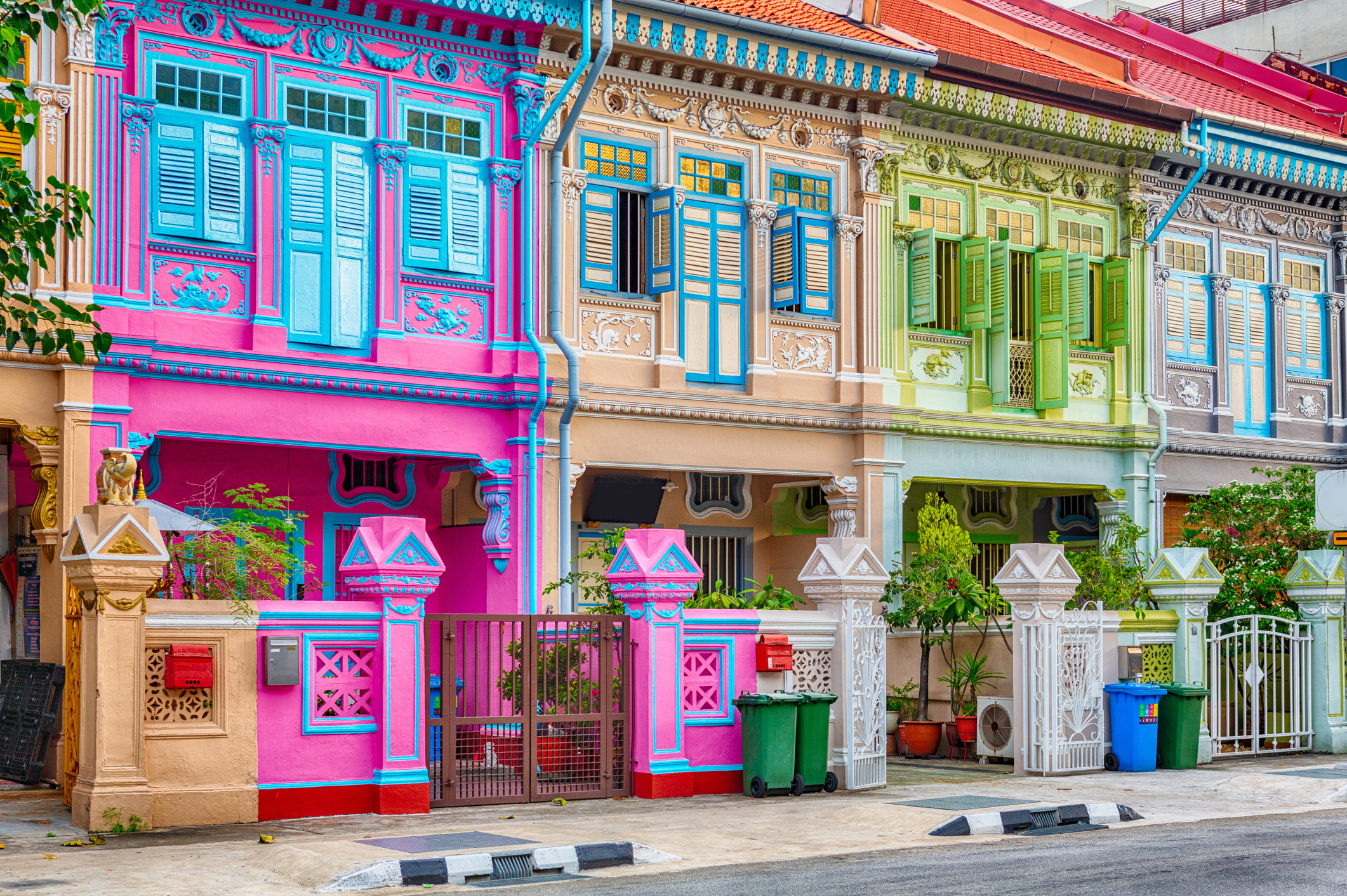
- Koon Seng Road, Joo Chiat: A street of pastel Peranakan shophouses with ornate tilework and candy-coloured facades. Best photographed in the early morning before the tour groups arrive.
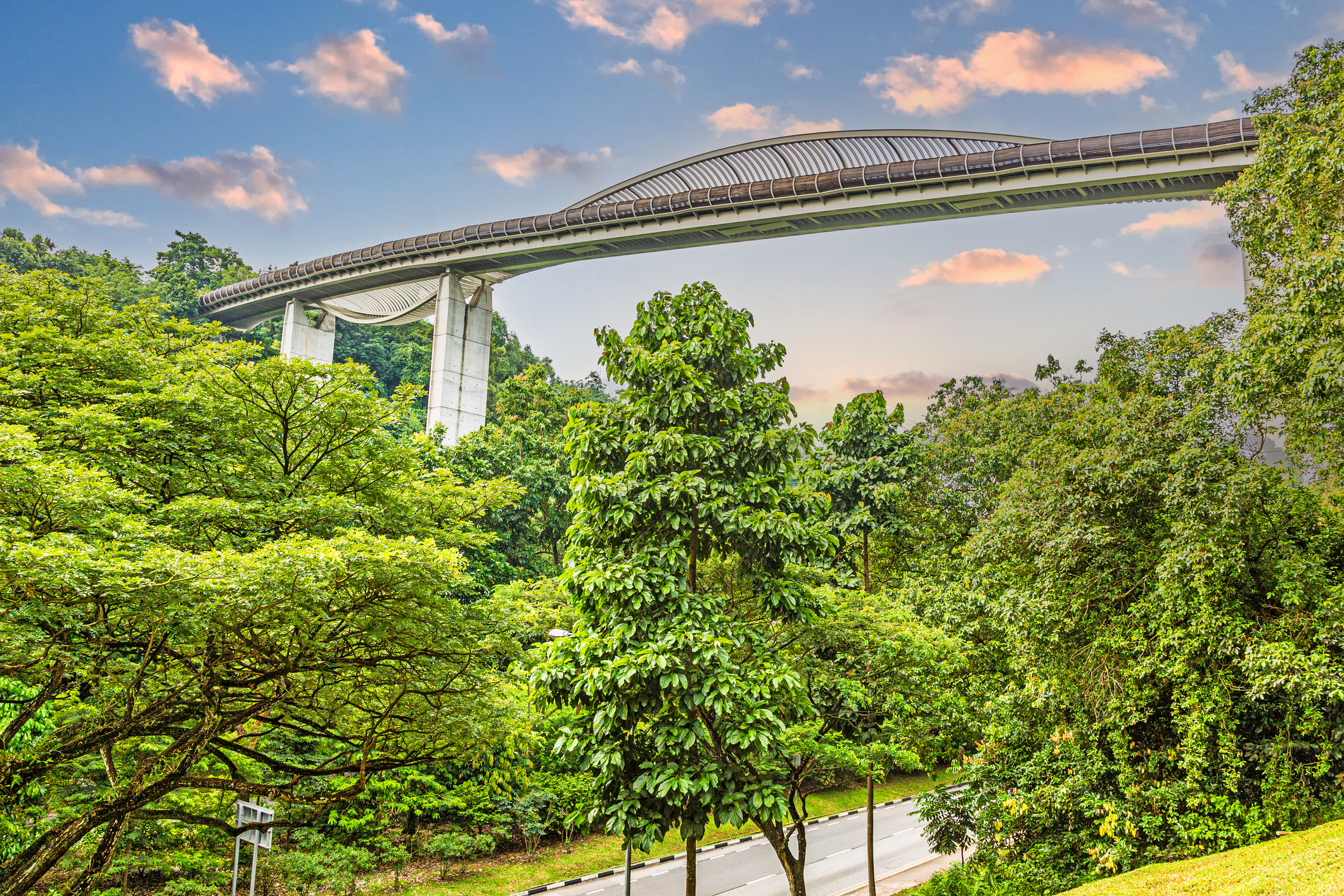
- Henderson Waves: Singapore’s highest pedestrian bridge at 36 metres, with a sinuous wave-shaped canopy that lights up at night. Free to visit, connects two hilltop parks.
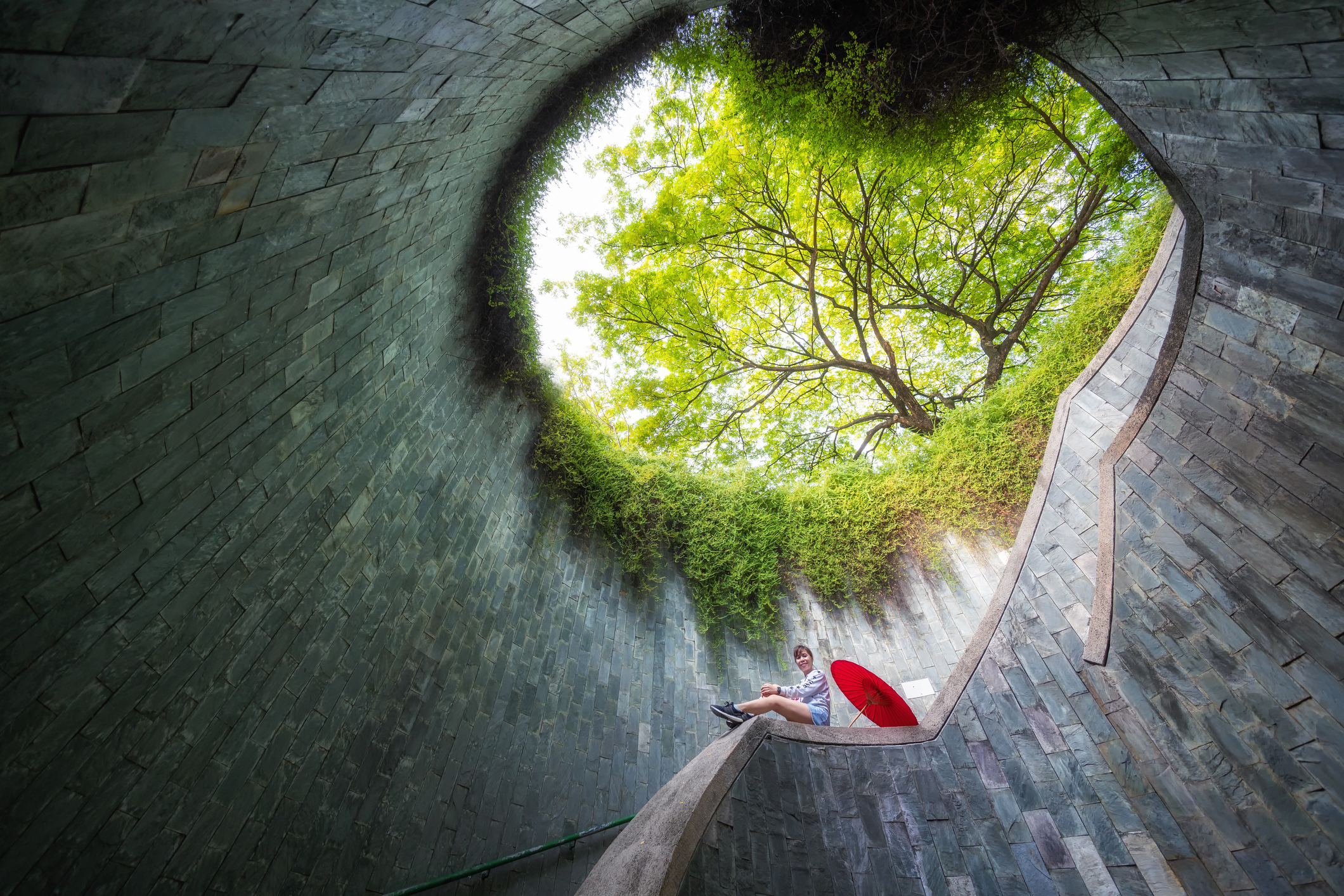
- Fort Canning Tree Tunnel: A spiral staircase framed by a circular canopy of roots, tucked inside Fort Canning Park. A quiet gem ten minutes’ walk from Clarke Quay.
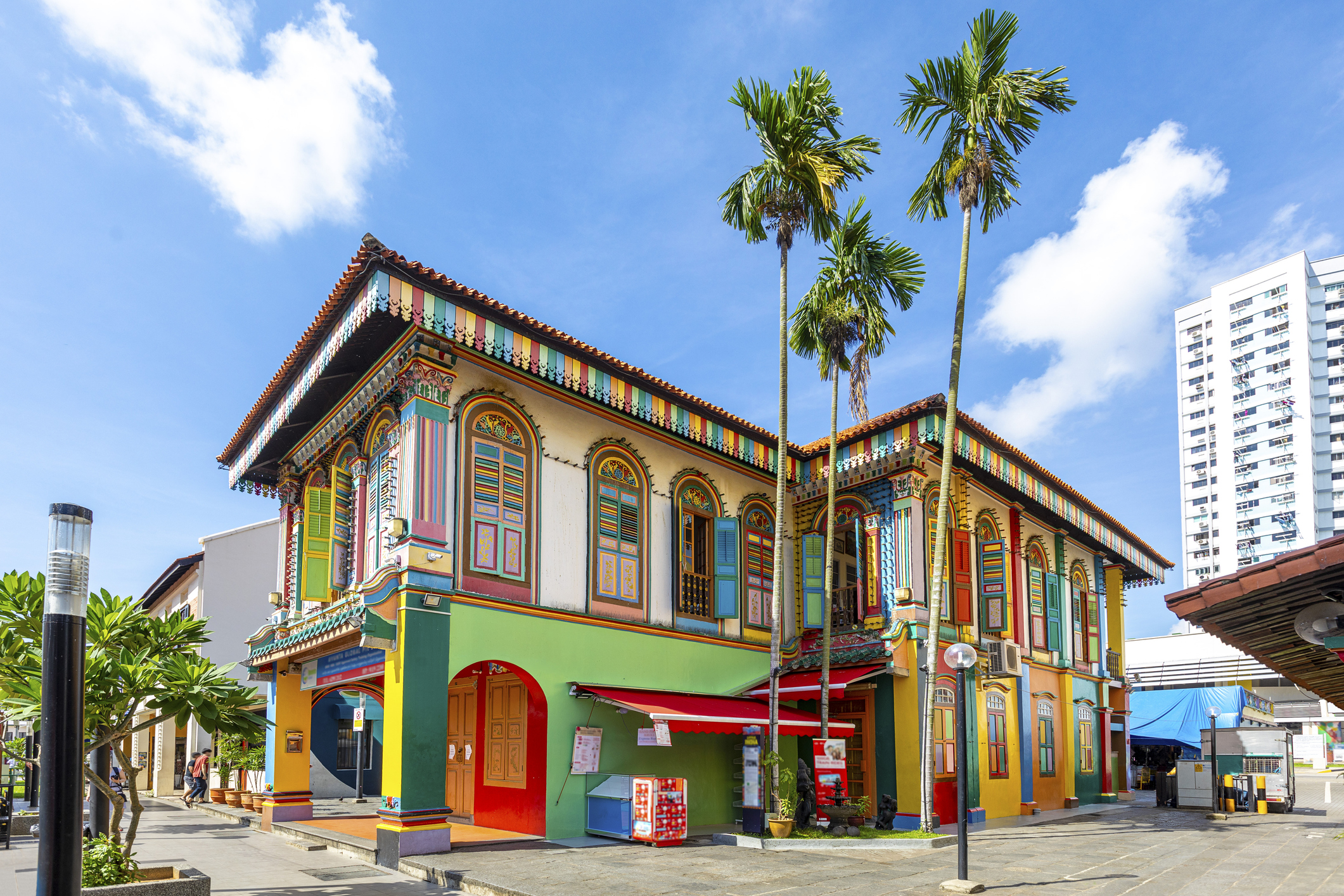
- House of Tan Teng Niah, Little India: One of the last remaining Chinese villas in Little India, painted in electric blues, greens and yellows. Every square centimetre is a photograph.
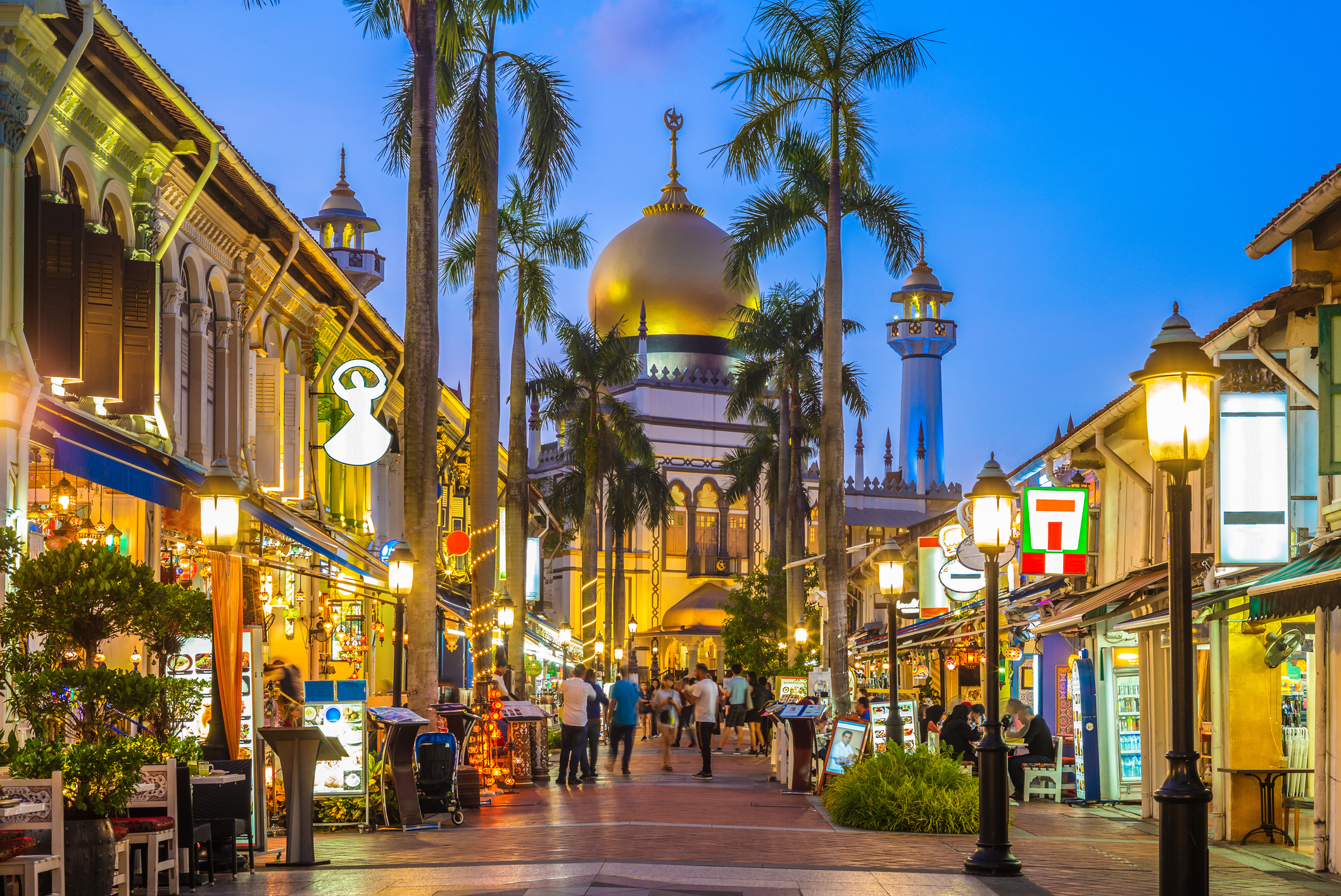
- Haji Lane, Kampong Glam: A narrow alley of independent boutiques and street art murals, framed at one end by the golden dome of the Sultan Mosque.
If you’re visiting in 2026, the newly opened Rainforest Wild Asia wildlife park and the expanded Singapore Oceanarium — three times the size of the aquarium it replaced — are also well worth your time.

Plan Your Singapore Trip with Flight Centre
Singapore is 13 hours non-stop from London Heathrow. British passport holders need no visa for stays up to 90 days — just a free electronic SG Arrival Card, completed up to three days before arrival. Singapore uses the same Type G plug sockets as the UK, drives on the left, and the MRT system operates much like the London Tube, with an EZ-Link card standing in for your Oyster.
Whether you’re planning a standalone city break or a Singapore stopover on the way to Australia or New Zealand, our Flight Centre travel experts can put together a trip tailored to your budget and schedule — ATOL-protected and fully supported from booking to return.

FAQ: Singapore Fun Facts
1. Is chewing gum really banned in Singapore?
Not exactly. It’s illegal to sell, import or manufacture chewing gum in Singapore — but chewing it is perfectly legal. Therapeutic and nicotine gum has been available from registered pharmacists since 2004. The ban applies to the trade in gum, not the act of chewing it.
2. How many islands make up Singapore?
Around 64 — one main island and approximately 63 smaller ones. Several of the smaller islands have been merged through land reclamation. Sentosa, the resort island, is the most visited. Pulau Ubin, to the north-east, remains largely undeveloped and offers a glimpse of Singapore as it was 50 years ago.
3. Do UK travellers need a visa for Singapore?
No. British passport holders can visit visa-free for up to 90 days. You’ll need a passport valid for at least six months beyond your travel dates, and you must complete a free Singapore Arrival Card (SGAC) online up to three days before arrival via the ICA website or app.
4. What is the best time to visit Singapore from the UK?
Singapore is a year-round destination with temperatures consistently around 30–32°C. The driest months are generally February to April and June to August. Rain during the wetter periods (November to January) tends to arrive as heavy short bursts rather than all-day downpours, so it rarely derails a full day of sightseeing.
5. Why is Singapore called the Lion City?
The name derives from the Sanskrit Singapura — ‘Singa’ (lion) and ‘Pura’ (city or fortress). According to Malay legend, a 14th-century prince named Sang Nila Utama spotted what he believed to be a lion upon landing on the island and took it as a propitious omen. Modern zoologists note that lions have never lived in Singapore, and what he likely saw was a Malayan tiger. The city kept the name regardless.
6. How long is the flight from London to Singapore?
A direct flight from London Heathrow to Singapore Changi takes approximately 13 hours 20 minutes outbound and around 14 hours on the return leg. Singapore Airlines, British Airways and Qantas all operate daily non-stop services on this route.